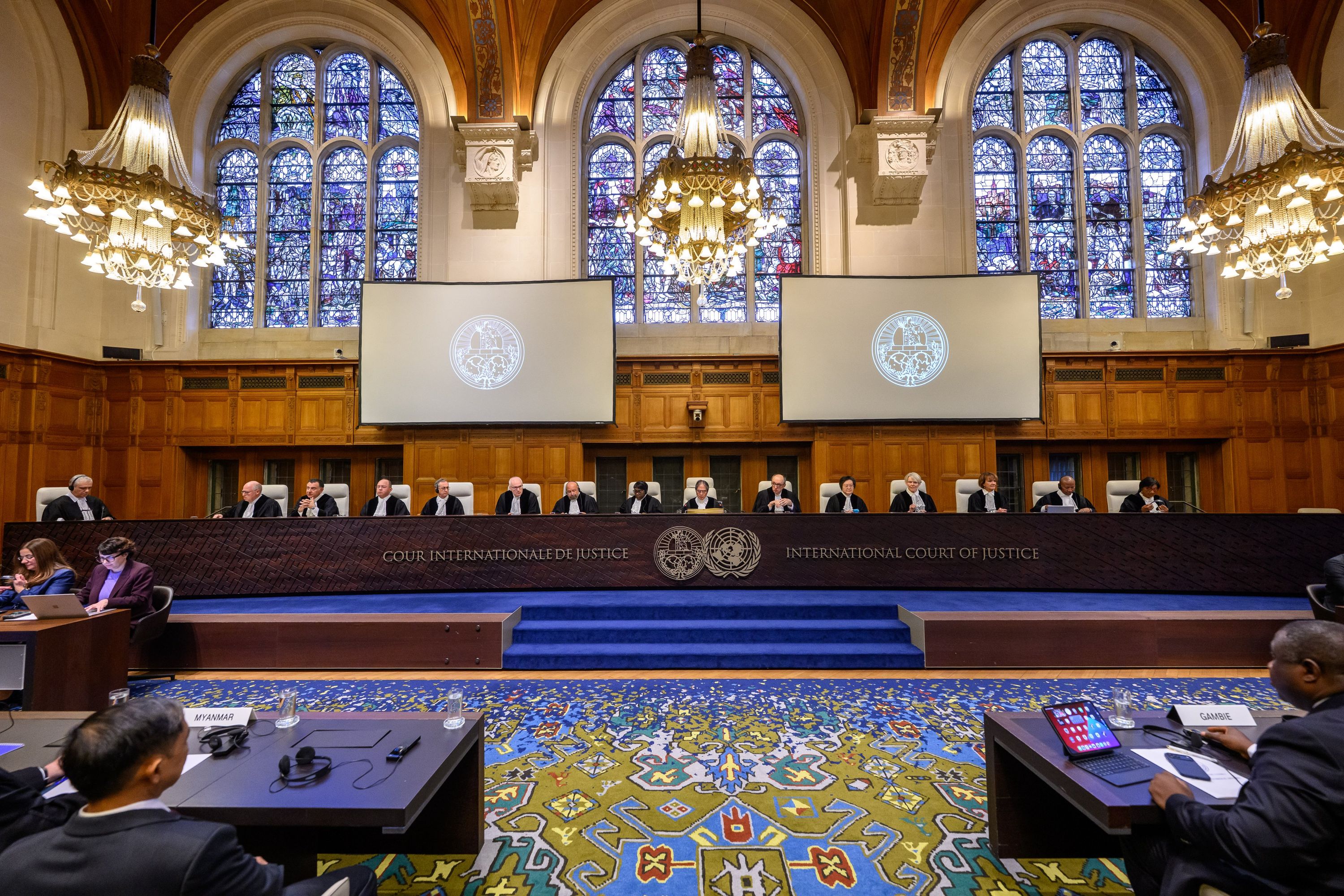
In international relations, traditional superpowers rely on hard power such as wealth, territory and armies. By contrast, a moral superpower leads by example and utilizes ethical authority to hold powerful nations accountable. On 19th November 2026, The Gambia’s seven-year legal battle culminated in a historic ruling that found Myanmar guilty of committing genocide. This landmark judgement on 19th November, 2026 reminded the world that, a state doesn’t necessarily have to be wealthy to set the global agenda. Most profoundly, it has proven that, in global governance, moral courage is a superpower all on its own. While Myanmar’s military junta is unlikely to voluntarily implement reparations or domestic prosecutions in the immediate term, the judgement fundamentally alters the diplomatic landscape. For the hundreds of thousands Rohingya survivors languishing in refugee camps, the ruling offers long-awaited moral and legal vindication. And for Gambians, this ruling carries a profound, personal resonance, that the smallest nation on mainland Africa is who summoned the heavily armed military regime over 11,000 kilometers away before the highest court and won.
Owing to its recent history, Banjul taking on such a burden that wealthier and more powerful states shied away from, is a deliberate strategic pivot toward liberal internationalism. It reinforces the belief that small nations are safest and strongest when international laws apply equally to everyone. By taking on the Rohingya cause in November 2019 and seeing it through to a historic merits victory, The Gambia has shattered the assumptions espouse by Thucydides that, the international system is anarchic and there is no higher authority to enforce order therefore power dynamics and security concerns dominates international politics. For decades, the 1948 Genocide Convention had been only treated as a paper tiger, states rarely sue each other unless their own citizens or borders were attacked. Because Myanmar had stripped the Rohingya their citizenship decades ago, they had no government to speak for them at the United Nations (Human Rights Watch, 2026). Myanmar lawyers initially challenged that a West African nation had no business meddling in Southeast Asian affairs. However, the ICJ rejected that excuse and affirmed that every signatory to the Genocide Convention has a legal duty to prevent and punish genocide anywhere in the world. The Gambia having ratified the Genocide Convention in 1978, brought the case under article 9 of the Convention which allows for disputes between parties “relating to the responsibility of a State for genocide” and related acts to be submitted to the ICJ. Although not being a direct victim of the alleged genocidal acts, Gambia argued that it is entitled under international law to demand reparations for Rohingya victims for breaches of the Genocide Convention. (Human Rights Watch, 2026).
This was historic as it marked the first time, that a country without any direct connection to the alleged crimes used its membership in the Genocide Convention to bring a case before the ICJ. More significantly, the Court’s 2026 merits judgement permanently cemented the doctrine of 'erga omnes partes' the principle that obligations under the Genocide Convention are owed to the international community of states parties as a whole. Given the Rohingya were rendered stateless by Myanmar’s 1982 Citizenship Law, they lacked a state protector capable of bringing a claim before the World Court. The Gambia’s victory, therefore, establishes that any signatory state can act as a fiduciary for humanity, closing a critical protection gap in international law. Unequivocally, questions on enforceability are anticipated and this reopens the debate on whether International Law is enforceable. Obviously, Myanmar will not voluntarily arrest and hand over it generals or expeditiously write cheques for reparations. More so, politics at the UN Security Council is one major bottleneck. However, with the principle of universal jurisdiction, Human Rights Watch (2026) in a release made following the judgement, submits that the ICJ’s ruling is final and binding. It isolates Myanmar’s junta, it obligates other states to halt arms sales and gives domestic courts around the world the legal backing to arrests and prosecute perpetrators under universal jurisdiction, as stated in article 94 of the Convention.
Dividends of Banjul’s Return to a Liberal Foreign Policy
The Gambia under Jammeh, pursuit a foreign policy that isolated Banjul, often characterized by erratic outbursts and retreat from international liberal institutions. Following Gambia’s democratic transition in 2017, Banjul made a strategic shift embracing principles of liberal internationalism. This recognizes that a small, developing state’s national security and global relevance are best protected by a strong rules-based international order (Keohane, 1984). In international relations scholarship, small states maximize influence through "niche diplomacy", concentrating scarce diplomatic capital on specific normative issues where they possess high moral credibility (Cooper, 1997). The Gambia’s domestic transitional justice architecture, anchored by the Truth, Reconciliation and Reparations Commission (TRRC), do not only give Banjul the moral authority to champion atrocity prevention abroad but also a reminder to the world that Gambians understood the cost of impunity. And that human rights, justice and accountability shouldn’t be a commodity affordable only by the rich, powerful and influential states. When former Justice Minister Abubacarr Tambadou visited the refugee camps Cox’s Bazar and later joined Attorney General Dawda Jallow in leading our legal team at The Hague, The Gambia spoke with a moral authority that no superpower could buy. Banjul was not lecturing from an Ivory tower; it was speaking as a nation that had chosen accountability over silence. This diplomatic dividends have fundamentally elevated The Gambia’s stature across multilateral institutions.
Acting on behalf of the 57 — member Organization of Islamic Conference (OIC), The Gambia forged an unprecedented cross-regional coalition. Eleven diverse states, spanning Europe, North America, Asia and Africa, including, Belgium, Canada, Denmark, The Democratic Republic of Congo, France, Germany, Ireland, the Maldives, the Netherlands, Slovenia and the United Kingdom formally intervened in support of Gambia’s arguments. Banjul emerged as a trusted diplomatic interlocutor linking the OIC, the African Union (AU) and Western democracies. (ohchr, 2026). This is a significant political capital in global diplomacy. As at the UN General Assembly and the UN Human Rights Council, diplomatic weight is heavily influenced by reputation and agenda-setting power. The Gambia’s sovereign equality before the ICJ allowed it to compel a state nearly twenty times its population to answer to mass atrocities. Consequently, this has empowered Gambian diplomats to command heightened influence in global governance debates ranging from climate justice and peace building to Security Council reform.
Finally, it redefines the Global South Agency. Historically, critics from the Global South have accused International Courts of selective justice. Noting that accountability mechanisms disproportionately targeted African leaders. By taking an initiative to hold an Asian military regime accountable, The Gambia has reclaimed ownership of international criminal and humanitarian law. It has demonstrated that international legal institutions are not merely institutions of western hegemony but tools of empowerment for smaller, post-colonial states. The ICJ’s November 19th judgement in The Gambia v. Myanmar stands as a defining milestone for both international law and small states diplomacy. Legally, it breathes operational life into the 1948 Genocide Convention, affirming that state sovereignty cannot serve as a shield for destruction of vulnerable minorities. While strategically, it validates Gambia’s return to a liberal foreign policy. By harnessing the power of international institutions, coalition diplomacy and moral leadership, The Gambia has proven that in ruled-based international system, the weight of a nation’s voice is measured not by the size of its army but by the strength of its commitment to justice.
REFERENCES • Application of the Convention on the Prevention and Punishment of the Crime of Genocide (The Gambia v. Myanmar), Merits, Judgment, I.C.J. Reports 2026 (November 19, 2026). https://www.icj-cij.org/case/178 • Application of the Convention on the Prevention and Punishment of the Crime of Genocide (Bosnia and Herzegovina v. Serbia and Montenegro), Judgment, I.C.J. Reports 2007, p. 43. https://www.icj-cij.org/case/91 • Application of the Convention on the Prevention and Punishment of the Crime of Genocide (Croatia v. Serbia), Judgment, I.C.J. Reports 2015, p. 3. https://www.icj-cij.org/case/118 Convention on the Prevention and Punishment of the Crime of Genocide, December 9, 1948, 78 U.N.T.S. 277. https://www.un.org/en/genocideprevention/genocide-convention.shtml • Cooper, A. F. (Ed.). (1997). Niche diplomacy: Middle powers after the Cold War. Macmillan. Keohane, R. O. (1984). After hegemony: Cooperation and discord in the world political economy. Princeton University Press. • Mearsheimer, J. J. (2001). The tragedy of great power politics. W. W. Norton & Company. United Nations. (1945). Charter of the United Nations, 1 U.N.T.S. XVI. https://www.un.org/en/about-us/un-charter
Did this land?
React & rate
More by
Lamin Njie
Reader reviews
Reader reviews
0 reviewsSign in to leave a review.
No reader reviews yet. Be the first.